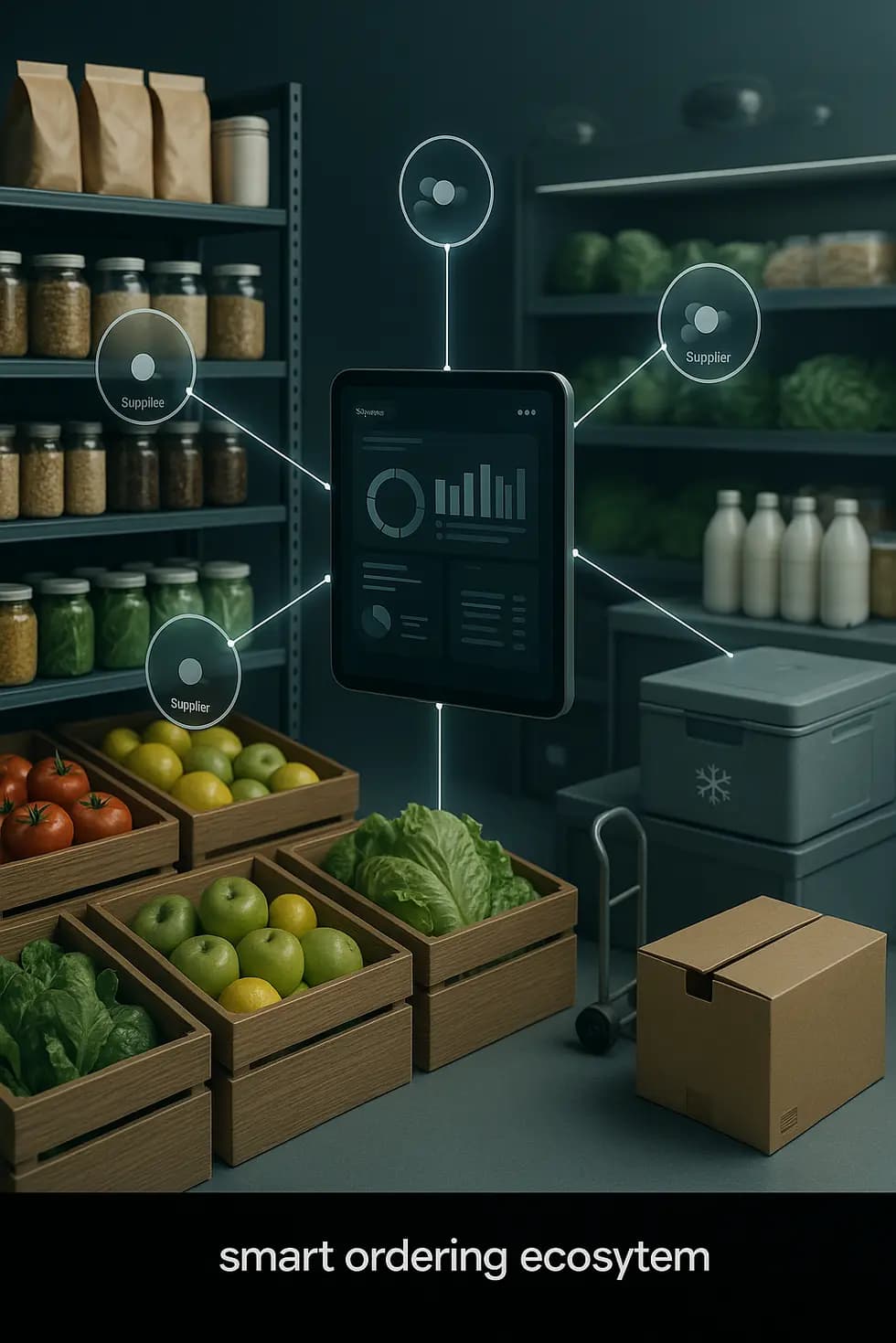
Ankorstore has just added the Fresh Food category to its B2B platform. In practical terms, retailers and brands can now source dry goods and fresh products in one place, with catalog prices described as guaranteed, low order minimums, and deferred payment terms of up to 90 days. For small businesses and SMEs in food retail, the value is immediate: fewer suppliers to manage, less administrative friction, and potentially more flexible cash flow.
The SME Opportunity: Centralize to Save Time and Cash
If you run a grocery store, a neighborhood shop, or a small specialty chain, the issue is very concrete: fresh products are already non-negotiable. Based on the data shared, 97% of food retailers purchase fresh products. In other words, this is not a niche; it is the operational core.
The real advantage of Ankorstore is centralization. One entry point for ordering both dry goods and fresh products means:
- fewer supplier calls,
- clearer invoicing,
- simpler purchase-to-accounting reconciliation,
- and better cash-flow management thanks to deferred payment terms of up to 90 days.
Add a 0% commission promise, and you get an attractive model for smaller businesses looking to reduce transaction costs. For an executive, this is the kind of announcement that signals operational streamlining: fewer low-value tasks, more time to sell.
The Caution: Simplify, Yes. Get Locked In, No.
The picture is not entirely risk-free. When a platform centralizes your dry goods and fresh supply chain, it quickly becomes the control center of your operations. That is where the risk of vendor lock-in appears: if too much of your purchasing is concentrated with one player, you lose flexibility to negotiate, benchmark, or switch quickly to other suppliers.
Another key issue is the cold chain. Fresh food is not like shipping standard cartons. It requires dedicated logistics, temperature controls, tighter lead times, and flawless service quality. Ankorstore relies on a dedicated logistics partnership for this offering, but on the SME side, you still need to make sure your internal operations can keep up: receiving, storage, quality checks, inventory rotation... Poorly managed fresh inventory leads to waste and eroded margins.
Finally, be careful with overly polished commercial promises. "Guaranteed prices" do not automatically mean "competitive prices" across the board. If delivery, preparation, or logistics costs are absorbed elsewhere, the real bill can rise quietly.
Compliance Considerations
Since Ankorstore handles order data, customer accounts, and commercial relationships, a minimum level of vigilance is still required on GDPR matters and, if you operate in Switzerland, on the nFADP. In particular, you should verify server location, data processing agreements, and the portability of purchasing information. The sources do not specify these elements, so they should be checked before you integrate the platform into your workflows.
Conclusion & Cohesium Support
In short, Ankorstore makes food sourcing simpler and potentially more efficient for SMEs. But more simplicity should not come at the cost of blind dependence. The right strategy is to adopt the tool without losing control of your suppliers, your margins, or your data flows.
Rather than patching things together, Cohesium AI can support you with a "SME Audit + Ankorstore Integration" package: GDPR/nFADP compliance audit, data mapping, vendor lock-in risk assessment, then order and accounting automation through n8n or Make. Contact us