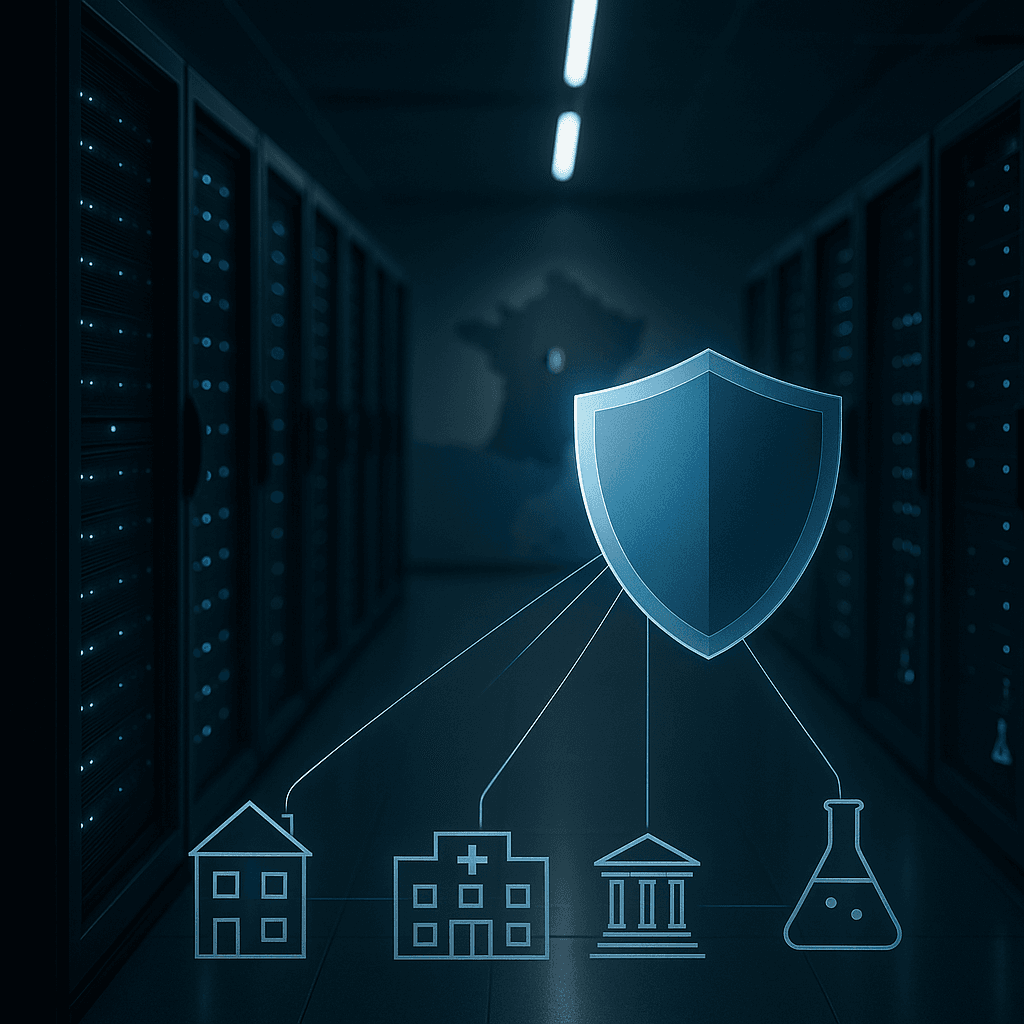
AntemetA (a French SME of roughly 300 employees) launched AntemetA Suite on February 5, 2025: an on‑prem AI platform built for public and private organizations that want AI without sending documents to OpenAI or Google. The deployment runs on the Telehouse‑3 campus (Paris‑Magny) and relies on open‑source models (Llama, Gemma, Mistral), with ready‑to‑use modules such as Chat (document question answering) and Text (compliant drafting).
In short: if you are an SME or mid‑market enterprise with sensitive data, this is worth watching. But not without doing your homework on operations and costs.
The Opportunity for SMEs
1) Regain control of your data
The primary business upside is risk reduction: data hosted in France, a controlled environment, and a "no US cloud by default" stance. For sectors like healthcare, finance, defense, legal, and R&D, that is often the number‑one prerequisite before you even discuss productivity gains.
2) Reduced vendor lock‑in on AI
Choosing open‑source models limits the nightmare scenario: "we built our workflow on a proprietary model and now the price explodes or the API changes." This architecture is more auditable and replaceable.
3) Rapid, concrete, revenue‑positive use cases
The document‑query and drafting modules attack classic ROI sources: internal support, RFP responses, executive summaries, procedures, compliance, knowledge bases. At 50 to 500 employees the benefits show fast: less time wasted searching, fewer errors, and cleaner document capitalization.
4) Integration capability
The value is not "AI for AI" but AI wired into your workflows via connectors and operated by your IT teams (or delegated). That integration is where demos turn into measurable value.
Where You Need to Be Vigilant
On‑prem = control, but also responsibility. And that is where the surprises hide.
1) Operating costs and infra lock‑in
Sovereign AI still runs somewhere: servers, GPUs, maintenance, monitoring, patching, continuity — and power. The risk is often budgetary rather than technical: you can win on compliance and lose predictability in OPEX if sizing is off.
2) No public pricing: demand a rigorous comparison
Pricing is not disclosed. AntemetA positions a "stable, independent" model, but the real SME question is: CAPEX or OPEX? cost per user? per document volume? per GPU? Before signing, get a quantified quote and benchmark it against alternatives (self‑hosting open‑source, or other hosters/architectures that match your constraints).
3) Scalability and performance: test on your data
A suite can shine in a POC and disappoint in production if your corpora are heterogeneous (scanned PDFs, contracts, emails, SharePoint) or if volume balloons. Pilot with real cases: latency, cost, error rates, and source governance.
Compliance Angle
GDPR: high criticality
The "data hosted in France" positioning simplifies data transfer questions and strengthens security control (notably with respect to Article 32). AntemetA highlights certifications like ISO 27001, HDS, and ISAE 3402 Type 1: a positive signal, especially if you handle sensitive data such as health records.
Audit before you commit: subcontracting clauses, audit rights, retention policies, access traceability, and governance of datasets used in your AI pipelines.
nLPD (Switzerland): watch out if you have Swiss clients
If you process Swiss data, validate the legal frame (hosting, responsibilities, technical measures). Depending on requirements, Swiss hosting options (for example Infomaniak, Exoscale) should be compared to the France/Telehouse scenario.
Conclusion & Cohesium Support
AntemetA Suite at Telehouse ticks many boxes for a practical sovereign AI for SMEs: data control, open‑source models, and an integration promise. But success hinges on three things: true cost, operations (DevOps/run), and contractual compliance.
Rather than cobbling something together, Cohesium AI can support you with a Sovereign AI Feasibility Audit: mapping sensitive data (GDPR/nLPD), risk review, and architecture selection (Telehouse vs local options based on your constraints). From there we can move to model governance and developing integrated AI/RAG agents tailored to your business tools.