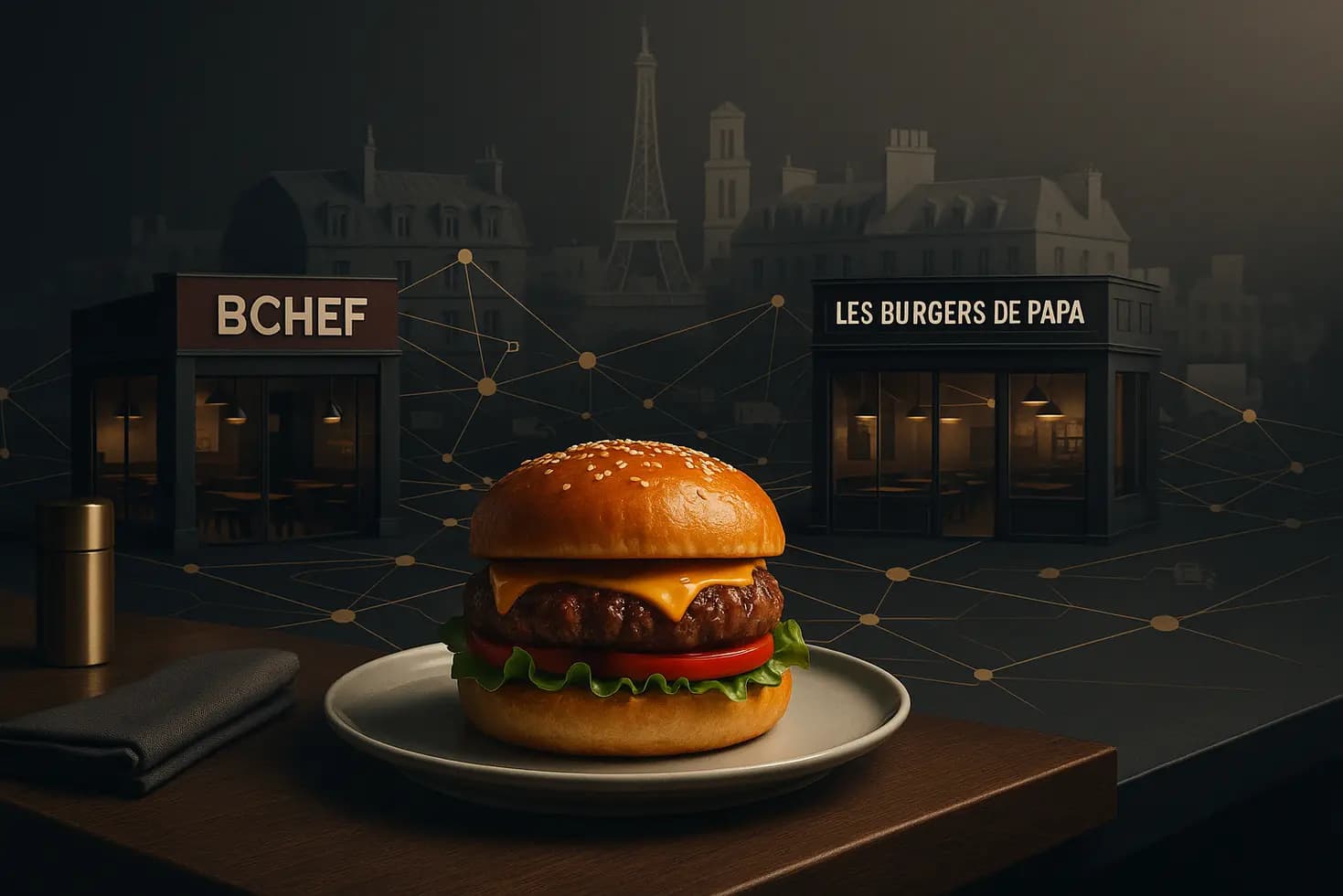
France’s gourmet burger market just hit a major acceleration point. On January 12, 2026, BChef announced the acquisition of 100% of Les Burgers de Papa. For leaders of SMEs and franchise operators in the food service sector, the message is clear: external growth is no longer reserved for large groups. When executed well, it can quickly deliver scale, stronger purchasing power, and greater market credibility.
With this deal, BChef moves to more than 70 restaurants, around 450 employees, and consolidated revenue above €40M in 2025. Both brands will keep their identities. And that is not a minor branding detail: in restaurants, preserving the brand often prevents you from breaking what actually brings customers in.
The SME Opportunity
This transaction is a textbook case of smart consolidation. Founded in 2015 and already operating 55 restaurants, BChef adds 21 more locations and clearly changes scale. For an SME, the upside is obvious: more volume, more leverage, and more capacity to invest.
In practical terms, critical mass creates several very tangible benefits:
- Centralized purchasing: better negotiation on ingredients, which keeps costs under control.
- Shared logistics: fewer duplicates, less friction, more operational flow.
- Amortized marketing: one campaign benefits a larger network, lowering the cost per restaurant.
- Stronger financing capacity: after raising €2.5M in early 2025, BChef shows that a well-structured network can also attract senior bank debt.
The real strength here is that BChef does not appear intent on flattening everything under a single identity. Keeping both brands distinct is often the right move when customer bases, locations, and brand histories differ.
The Watchouts
That said, do not confuse growth with magic. Buying a network in restructuring is not the same as buying a ready-made burger package. You are taking on costs, habits, teams, and sometimes underperforming locations.
First risk: operational integration. Two banners, two cultures, and more than 450 employees in total means processes must be harmonized, tools aligned, and decisions made quickly. If governance is weak, synergies remain theoretical.
Second risk: margin pressure. The announcement mentions lower prices to give the brand fresh momentum. Good for customers, but risky if the cost structure is not under control. In restaurants, an overly aggressive pricing strategy can erode profitability faster than expected.
Third risk: the promise of future growth. The roadmap calls for around ten openings in 2026-2027 and potential external acquisitions. Ambitious, yes. But every new opening adds complexity: hiring, quality control, cash management, training, and supervision. Growth is not just one more line in an Excel sheet.
Conclusion
This acquisition makes one thing clear: in an SME, size is not just an ego topic; it is often a survival topic. Consolidation can create value quickly, provided it is managed with discipline. Otherwise, it turns a local issue into a group-level headache.
The right reflex for a leader? Look beyond revenue and assess the real ability to integrate, standardize, and finance what comes next. That is where the difference lies between a strong acquisition and a very expensive mess. Contact us to discuss custom integration or a strategic audit.