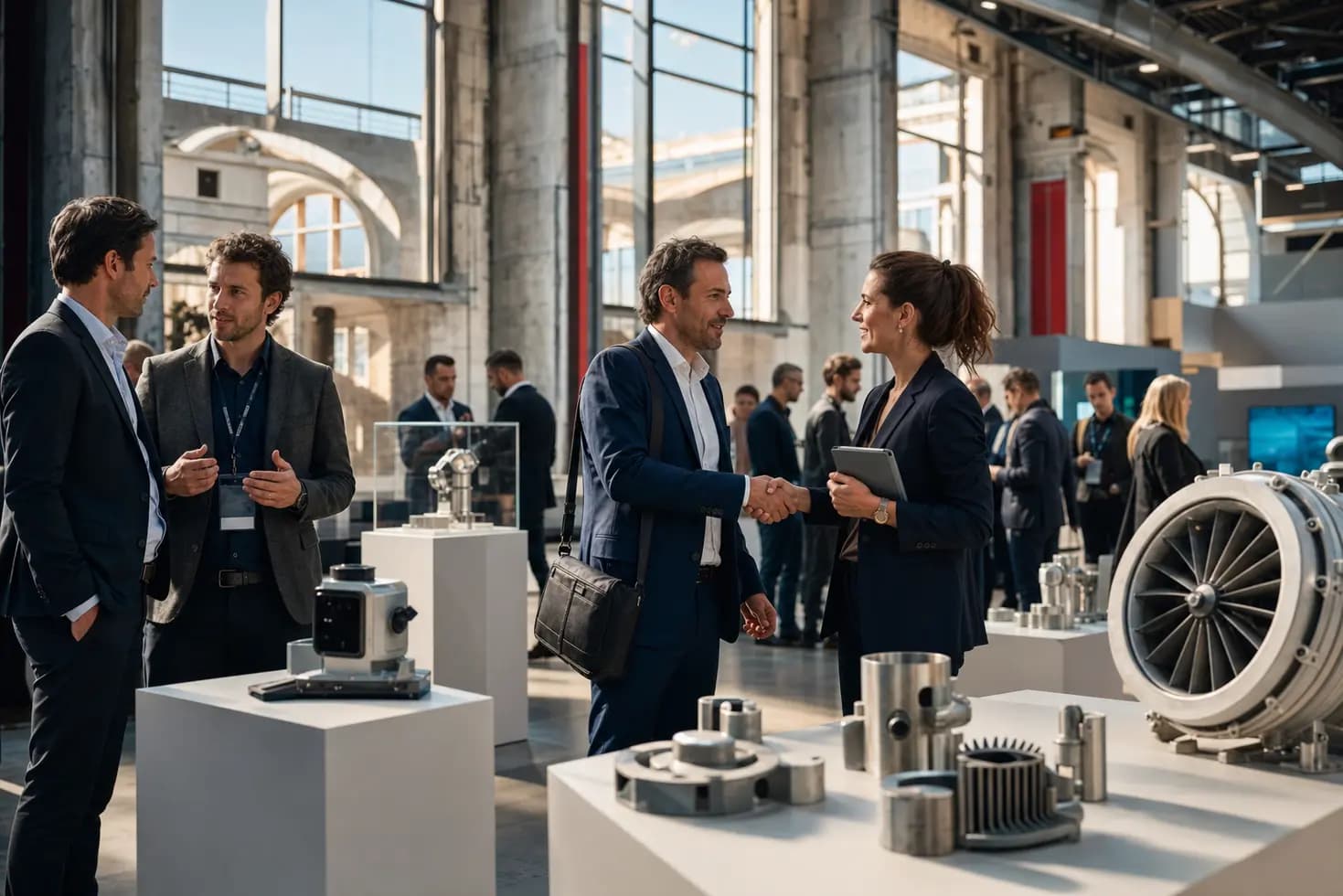
The 2026 Rencontres du Made in France return to Marseille, at La Friche la Belle de Mai, on June 10 and 11, 2026. The format is clear: one business day open to all on June 11, plus conferences, an exhibitor village, innovation spaces, and networking. The audience will be around 400 participants, with a clear positioning around brands, manufacturers, and companies that want to showcase French expertise.
For a B2B SME manufacturing in France, this is not just another trade show. It is a showcase where the "Made in France" argument does not need a ten-minute explanation—it is already in the room. The result: faster conversations about business, quality, reshoring, lead times, and industrial sovereignty. In other words, less education, more meaningful discussions.
The SME Opportunity
The first benefit is commercial time savings. At a generalist event, a company spends much of its energy explaining why it exists, what it makes, and why its approach deserves attention. Here, the setting does the filtering in advance. The decision-makers, buyers, and partners present are, by definition, already receptive to the topic. That increases the likelihood of qualified contacts and reduces commercial noise.
The second advantage is credibility. An SME that plugs into this momentum benefits from an environment where reshoring, quality, and local roots are highly valued. For an industrial brand, it is an excellent setting to test a message, validate a positioning, or reinforce a commercial promise. If the company wants to move upmarket, the event acts almost like a resonance chamber for its image.
The third lever, often underestimated, is the network. The exhibitor village and informal moments make it possible to meet other manufacturers, subcontractors, and local partners. For an SME, a strong partnership can be worth as much as a direct lead: new production capacity, a complementary product line, shared logistics, or simply an opening to a larger buyer.
Watch Outs
The main risk is thinking that showing up is enough. The event is concentrated into a single flagship day, so without preparation, you can easily leave with a stack of business cards and very few concrete opportunities. If meetings are not scheduled in advance, the return on time and travel investment can disappear very quickly.
Another point to watch: the format is broad. The "Made in France" theme attracts a wide range of profiles, but not necessarily your ideal targets. Without a clear positioning—industry, buyer type, sales message, flagship offer—you risk speaking to everyone and therefore to no one. For an SME, the real issue is not being visible, but being memorable to the right people.
Finally, make sure you distinguish this event from other Made in France gatherings in 2026, some of which are more consumer-focused. Before blocking your calendar, confirm that you are looking at the right format for your B2B objective. And since participation or exhibiting conditions are not clearly detailed in the available information, it is better to validate the budget and the expected visibility before committing.
Conclusion
The 2026 Rencontres du Made in France can be a strong commercial accelerator for an industrial SME or a B2B brand looking to capitalize on demand for French-made production. As long as you arrive prepared, with precise targets and a sharp message, this day can generate much more than visibility: a real pipeline of prospects and a few valuable partnerships.