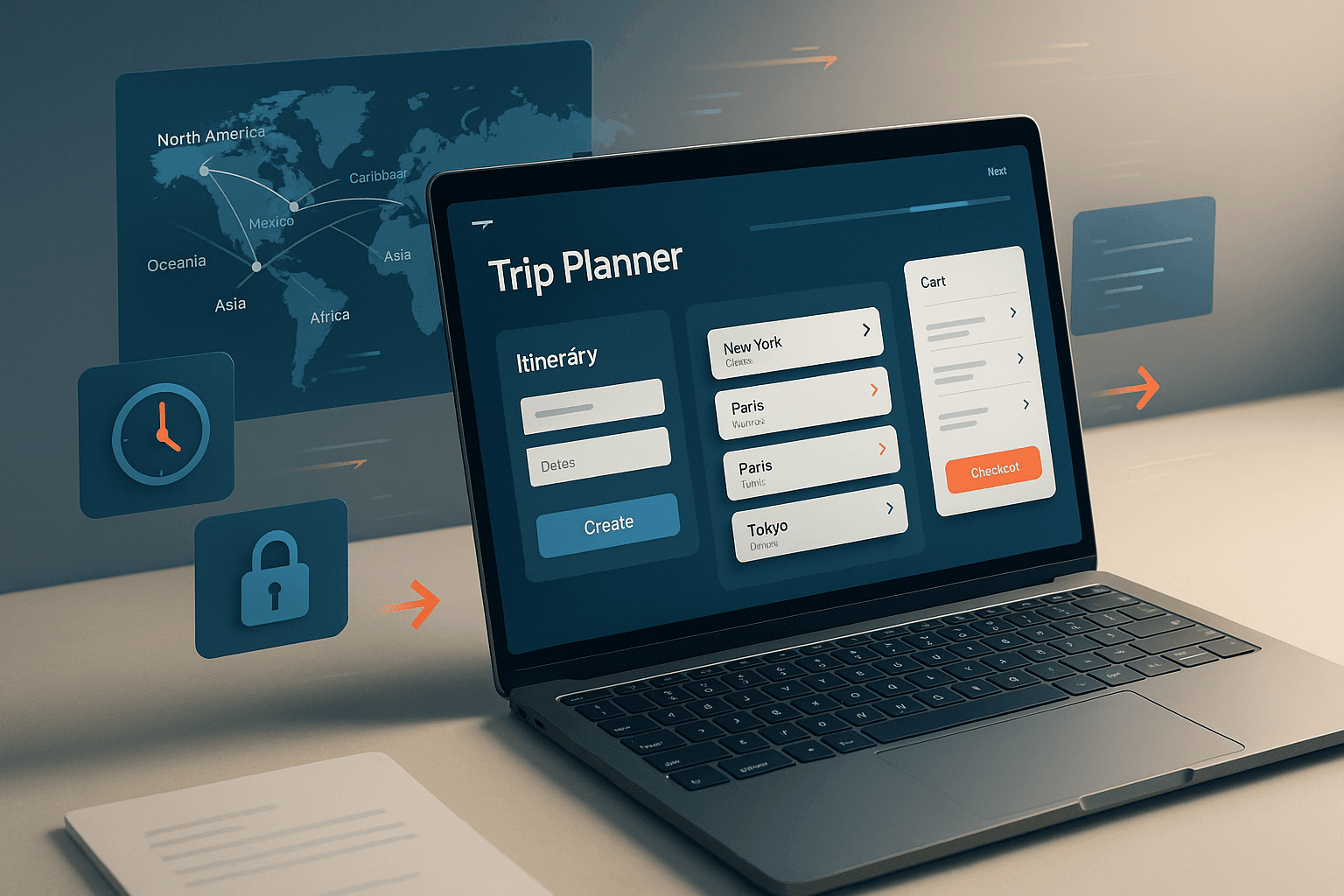
At the end of January 2026, Naar Bespoke Travel (a Belgian pan‑European tour operator founded in 1996 with 100+ employees) launched a new B2B platform for travel agencies. The promise is simple: a single console to build itineraries, track bookings and access Naar’s inventory (North America, Caribbean, Mexico, Oceania, Asia, Africa, Europe) without switching between emails, PDFs and homegrown spreadsheets.
On paper it’s a friction‑reduction redesign: an improved Trip Planner, a more intuitive itinerary interface, a redesigned cart (vertical menu) and a status bar to track progress. The executive question is straightforward: does this cut your operational costs — or does it increase your dependency on a single supplier?
SME Opportunity
A well‑designed B2B platform is not a gimmick. It can free up hours per week and recover margin without selling another trip.
- Less time wasted configuring trips: if the Trip Planner delivers, advisors spend less time searching and assembling, and more time advising and closing.
- Better case traceability: the status bar (and a modernized UX) reduces internal "where is this?" queries, follow‑ups and data entry errors.
- Centralized access to Naar inventory: for agencies already doing significant business with Naar, centralizing offers and options prevents fragmentation (and the drop in service quality under load).
Practically, this matters most when more than 30% of your revenue passes through Naar, or when your teams are spending too much time navigating legacy systems instead of producing fast, accurate quotes.
Vigilance
When a tool becomes your primary gateway to a supplier’s offer, you need to read between the lines. The gains are real — and so are the risks.
- Commercial lock‑in: migrating processes and habits onto a proprietary platform is convenient… until pricing, features or product priorities change. Reversing that migration is costly (time, retraining, reorganization).
- Team adoption: a UX overhaul implies a learning curve. Without a short change‑management plan (training + internal champions), you pay the transition in lost productivity.
- Unspecified integrations: compatibility with your CRM/ERP isn’t detailed (APIs, webhooks, exports...), so there’s a real risk of duplicate data entry: advisors work in Naar, then rekey data elsewhere. The ROI disappears fast.
- Data sovereignty & security: there’s no public information about server location, encryption or precise responsibilities. A travel B2B platform can process sensitive data (itineraries, PII, contact details).
The Compliance Point
This isn’t paperwork for its own sake: it’s about operational and reputational risk. A platform that centralizes client itineraries and traveler information places you squarely under GDPR obligations (and nLPD for Swiss‑related clients).
Before you commit (or accelerate usage), get these items in writing:
- Where are the data hosted? (EU / outside EU, cloud provider, subprocessors)
- Who is the data controller? Naar, your agency, or joint responsibility depending on context
- What rights does the agency have? access, export/portability, and retrieval of data if you stop using the platform
- Retention periods and deletion policy
- Third parties involved (analytics, email providers, payment processors) and the contractual clauses that govern them
In short: audit the entire processing chain before placing your production workload on it.
Conclusion & Cohesium Support
Naar’s new B2B platform can be a genuine accelerator: faster workflows, better visibility, fewer friction points. But to capture ROI you must avoid two classic traps: uncontrolled dependency and duplicate data entry — and you must keep compliance front and center when customer data is involved.
Rather than patching things together, Cohesium AI can support you on two concrete fronts: (1) a GDPR / nLPD audit of the Naar platform (data flow mapping, agency contract analysis, practical recommendations), and (2) post‑deployment automation using n8n/Make to integrate Naar B2B with your CRM/ERP (sync itineraries, booking alerts, payment exports) and turn the platform into a true internal efficiency lever. Think of this as digital craftsmanship — a tailored integration, not mass production.
Talk to us about a custom integration or a strategic compliance audit: Contact us