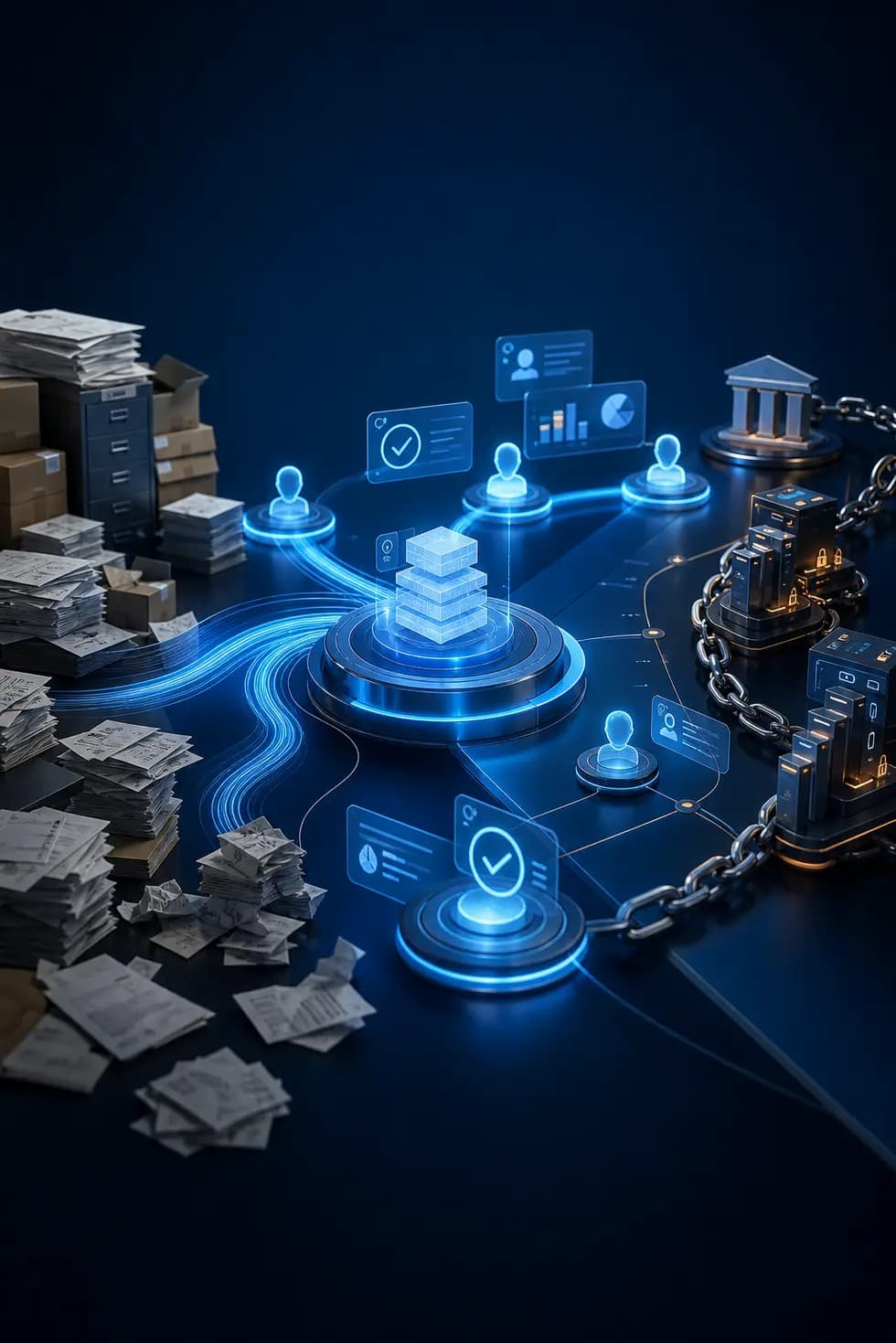
On May 21, 2026, Coupa announced its acquisition of Tonkean, an agentic workflow orchestration platform designed to streamline intake and procurement processes. In plain English: instead of routing requests through email, Excel spreadsheets, and manual approvals, AI agents can now handle a large part of the workflow. For SME leaders and CIOs, the value is straightforward: less friction, fewer errors, more visibility... as long as you keep control of the machine.
The SME Opportunity
The real value of this acquisition is not technology for technology’s sake. It is operational efficiency. Tonkean brings a no-code layer with more than 250 connectors, capable of turning a natural-language request into a structured workflow: budget checks, routing to the right approver, purchase order creation, and synchronization with the ERP or accounting system.
For an SME, the benefits are very tangible: shorter approval cycles, less repetitive data entry, fewer “shadow” purchases outside the process, and better adoption of internal policies because the interface becomes easier to use. On the finance side, it also means more traceable workflows. On the procurement side, it improves the ability to standardize supplier requests, onboarding, and commitment tracking.
Coupa is pushing an interesting model here: making procurement workflows more autonomous through coordinated agents. In practice, that points to a future where spend management feels less like data entry software and more like a copiloting layer for operations.
The Caution
That said, the picture is not all upside. First issue: lock-in. The deeper you integrate with a vendor like Coupa, the more value you capture... but the more you depend on its roadmap, pricing, and technical decisions. For an SME, that is both reassuring and risky.
Second issue: complexity. An AI agent is not magic. To orchestrate a purchase correctly, you need to map business rules, exceptions, approval thresholds, fraud risks, and connected systems. Without that groundwork, you mostly end up with a polished but opaque workflow that no one dares to fix.
Third issue: governance. When AI triggers or blocks steps in financial flows, you need to know who decided what, on what basis, and with what level of human oversight. Without clear logs and alert thresholds, the convenience of automation can quickly turn into a loss of control.
The Compliance View
This announcement directly involves supplier, employee, and purchasing data, which puts it squarely in GDPR and Switzerland's revised FADP territory. Before moving fast, an SME should verify data residency, processor agreements, any transfers outside the EU or Switzerland, and data minimization across workflows.
From an AI Act perspective, this is generally a business use case with limited risk, as long as the agents are not making fully automated decisions with significant legal effects on individuals. The best practice is clear: transparency about the models used, decision logging, and human oversight whenever contractual commitments, payment blocks, or supplier sanctions are involved.
Conclusion & How Cohesium Helps
This acquisition confirms a broader trend: procurement workflows are becoming smarter, faster, and more automated. So the real question is not “should you adopt this?” but “how do you do it without turning your information system into a black box?” Instead of improvising, Cohesium AI can audit your procurement and spend workflows, identify the highest-ROI use cases, and design custom automations with n8n, Make, APIs, and AI agents adapted to your stack. The result: more automation, less dependency, and an architecture built for your SME — not for a vendor brochure. Contact us