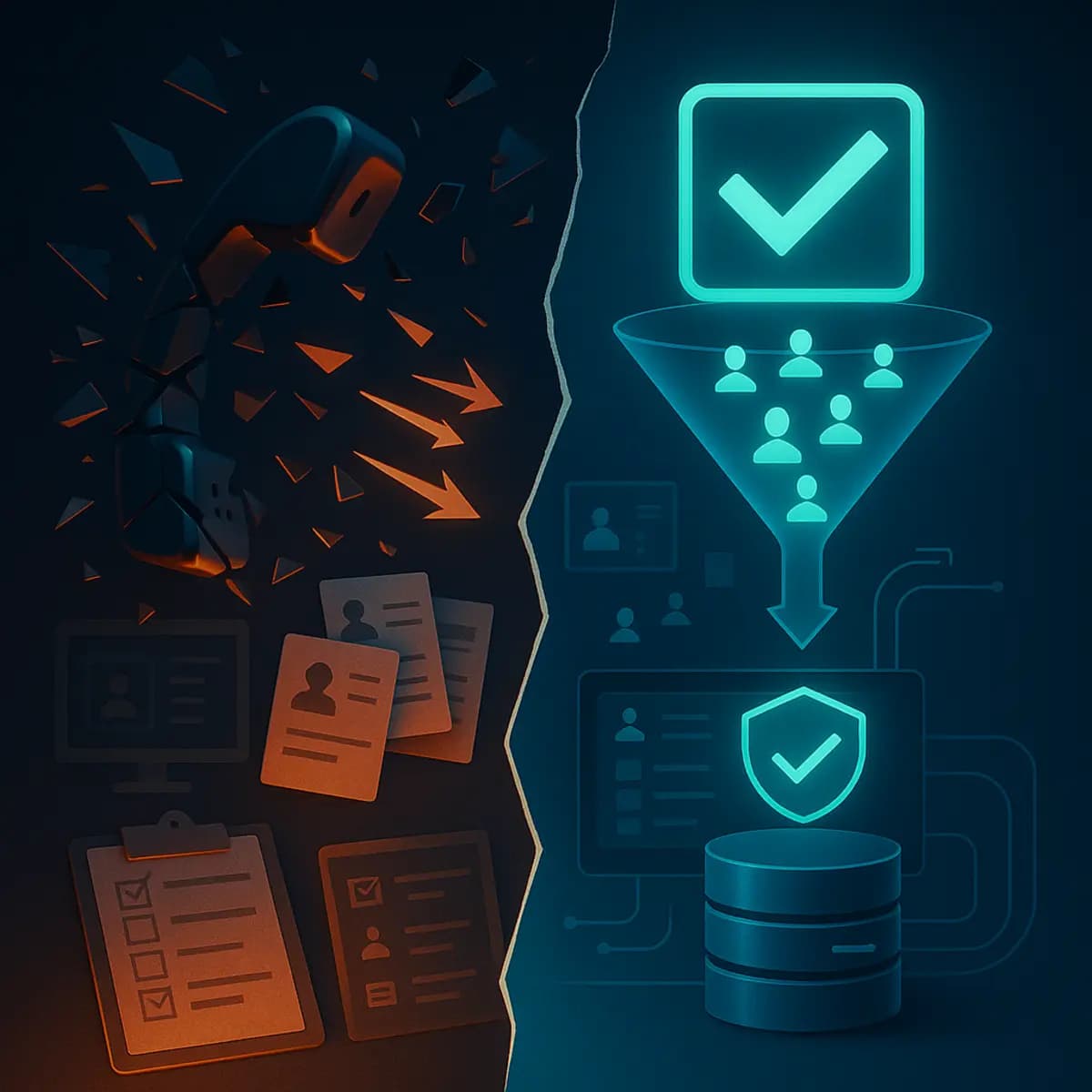
If your company still relies on the phone to generate leads, there is one date to mark in red on the calendar: August 11, 2026. From that point on, B2C telemarketing changes its logic entirely. We will no longer be in a system where the individual must say “no” to be called, but in a system where the business must be able to say, “yes, they agreed.” In other words: without explicit prior consent, the call is prohibited.
For SMEs, this is a real operational shift. Sales teams, CRMs, contact databases, and calling scripts will all need to be redesigned. And for businesses that also work in B2B, the rule remains more flexible, but with a much stronger requirement for proof and traceability than before.
The SME Opportunity
The good news: this shift can also become a performance advantage. In B2C, it forces companies to clean up databases, stop “blind” calling, and focus efforts on prospects who have genuinely opted in. Less volume, yes. But higher quality, better conversion rates, and less time wasted on contacts who answer just to tell you to stop calling.
On the B2B side, nothing prevents you from continuing phone prospecting, provided you properly document legitimate interest, the source of the data, and the link between your offer and the contact’s role. For a well-structured SME, this is almost an upgrade opportunity: fewer mass campaigns, more precision targeting, and stronger commercial discipline. In short, the model shifts from “call everyone” to “call the right people, at the right time.”
There is another often underestimated gain: automation. By locking down your CRM with simple rules, you can prevent non-compliant calls, track consent, and strengthen the reliability of your database without adding pressure on your sales team.
The Risk
The downside is operational complexity. If your data comes from purchased lists, poorly configured forms, or legacy marketing processes, there is a strong chance not everything is clean. And the risk is not theoretical: a poorly governed campaign can expose you to sanctions, call by call.
Another friction point: it will no longer be enough to “assume” a contact agreed. You will need to prove it. Date, source of consent, collection method, CRM status: everything must be traceable. Without that, your teams may spend more time checking compliance than selling.
Add to that stronger technical filters imposed by telecom operators, calling scripts that need to be secured, and essential field training. For many SMEs, the real threat is not the law itself. It is the gap between the law and the existing sales system.
The Compliance View
From a regulatory standpoint, the picture is clear: in B2C, phone prospecting is moving to a strict opt-in regime. Consent must be freely given, specific, informed, unambiguous, and revocable. In B2B, the legal basis may still rely on legitimate interest, but it must be documented, proportionate, and traceable.
For an SME, this means adopting a real GDPR accountability framework: proving the origin of contacts, securing the purpose of processing, retaining consent records, and automatically blocking calls to non-compliant records. If you prospect outside France, especially in Switzerland, the rules may differ, so the scope must be verified country by country.
Conclusion & Cohesium Support
The message is simple: in 2026, phone prospecting will no longer be won through volume, but through data quality and process discipline. SMEs that prepare early will gain efficiency. The others will discover compliance at the worst possible moment: when it is already too late.
Rather than patching things together, Cohesium AI can perform a GDPR audit of your databases, automate consent checks in your CRM, and map your contact sources to secure your prospecting workflows. You have only a few months to get ready: why not turn this constraint into a commercial advantage? Contact us