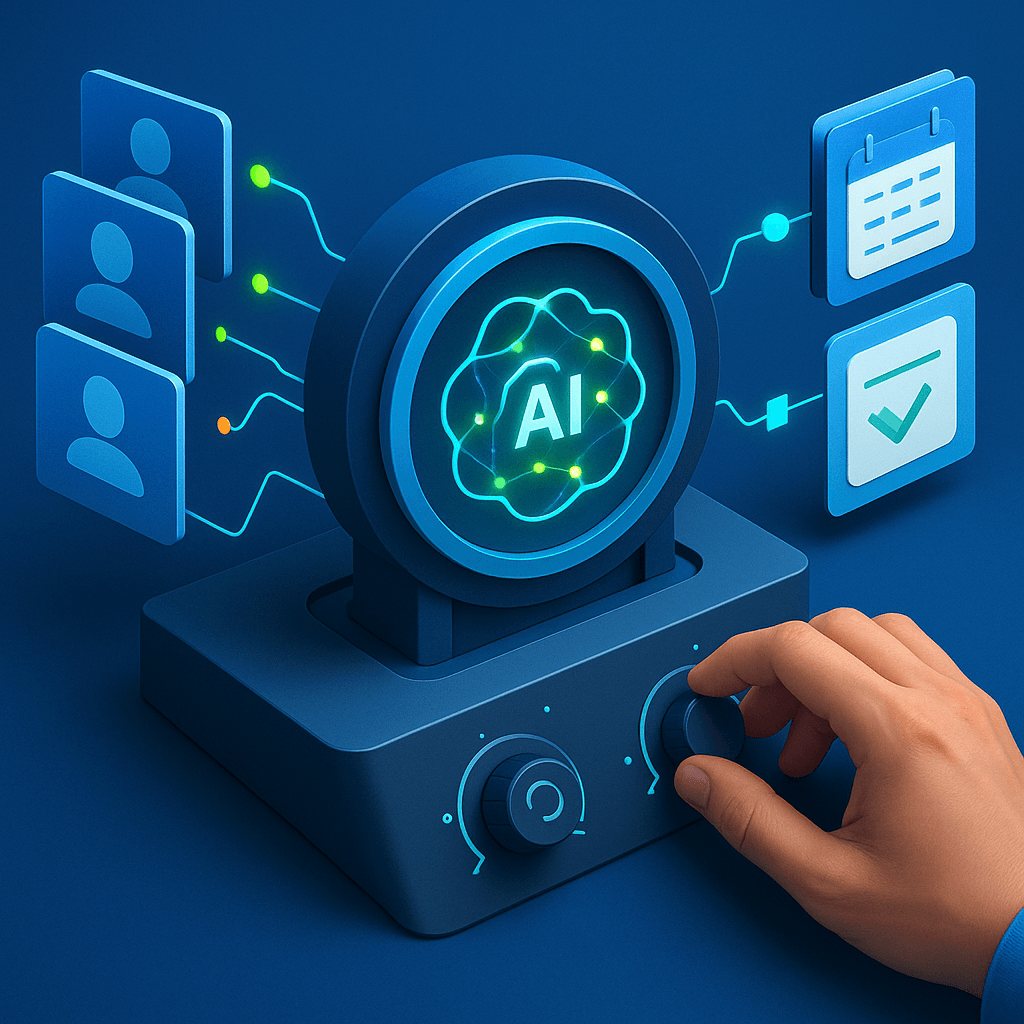
LinkedIn is no longer just a channel for “being visible.” For a B2B SME, it can be a structured prospecting engine — provided you maintain cadence, precise targeting, and messages that speak the buyer’s language. This is precisely where AI (e.g., ChatGPT-class models) changes the equation: it slashes production time and can industrialize a sales motion that was until now artisanal.
One anecdote (not independently verified) claims a ChatGPT‑crafted post delivered four contracts versus zero from “classic” posts over six months. Treat that number cautiously — but the signal matters: when content is well calibrated, the pipeline follows.
The SME Opportunity: save time, increase cadence, improve qualification
For micro and small businesses without a dedicated marketing function, LinkedIn often becomes the “when we have time” channel. AI turns that “when we have time” into a repeatable process.
- Accelerated content production: start from a short brief (sector, ICP, offer, objection) and the model proposes structure, angles, and variants. Result: far fewer hours spent drafting a post.
- Scaled targeting and personalization: segment by behavior, tailor messaging by persona, rephrase by stage of the buying cycle. You stop writing for “everyone” and start speaking to a useful, revenue‑driving audience.
- Shorter sales cycles: by linking lead capture, qualification and follow‑ups (CRM + nurturing), you avoid warm leads cooling off for lack of timely outreach.
Business translation: more consistency, more relevant conversations, and potentially more opportunities — without hiring a full‑time content manager.
Caveat: AI can scale volume… and destroy your targeting
The classic trap is confusing “publish more” with “sell more.” AI can output 20 posts in 10 minutes. But if your strategy is fuzzy, you’ll just have 20 posts and off‑target leads.
- Validate the numbers: the cited case is unsourced. Before you pledge a magical ROI, instrument everything: tracking, attribution, and clear links from posts → conversations → pipeline.
- Vendor lock‑in: relying on a single provider (e.g., OpenAI) with no contingency accepts price, policy or feature risk.
- Sensitive data: mixing LinkedIn identities, messages and history with AI prompts can quickly drift into uncontrolled profiling.
Compliance note: LinkedIn + AI requires data discipline
Once you handle names, emails, titles, messages or exchange histories, you’re processing personal data. LinkedIn already stores a lot; adding an AI SaaS (often hosted outside the EU) requires guardrails.
Good practice: audit your data flows — who sends what, where, why and how long it is retained. If you inject identifiable data into an AI tool, put in place a Data Processing Agreement and document the legal basis/consent for processing in your jurisdiction. Practically, a cleaner approach is to capture leads via a structured form (hosted in Switzerland/EU) instead of relying on brittle scraping and unmanaged exports.
Conclusion & Cohesium’s support
LinkedIn amplified by AI can become a genuine revenue engine for a B2B SME: more consistency, sharper messages, and faster qualification. But to turn activity into ARR you need a framework: strategy, controlled automation, and data hygiene.
Don’t hack it together. Cohesium AI can help with: a LinkedIn + ChatGPT flows audit (governance & compliance), n8n/Make automation (capture → CRM → nurturing), hosting recommendations (Exoscale Zurich, Scaleway, OVH depending on constraints), and a custom AI agent (RAG) to respond to leads using your product/service data — not generic answers.