When CTOs and founders hear "customer service," many still picture tickets, returns, and an unavoidable cost center. HID Global (identity & access security) proved the opposite in EMEA (announced February 2026): by redesigning support they delivered an NPS of 76, CSAT 86%, 98% of requests handled within 24 hours and 90% resolved within 4 hours. Execution matches the promise: orders shipped in under one day.
The strategic insight for an SME or an IT organization: this isn’t just a nicer support team. It’s a scalable B2B2C model where support becomes a commercial differentiator — a lever for margin and retention.
The Opportunity for SMEs
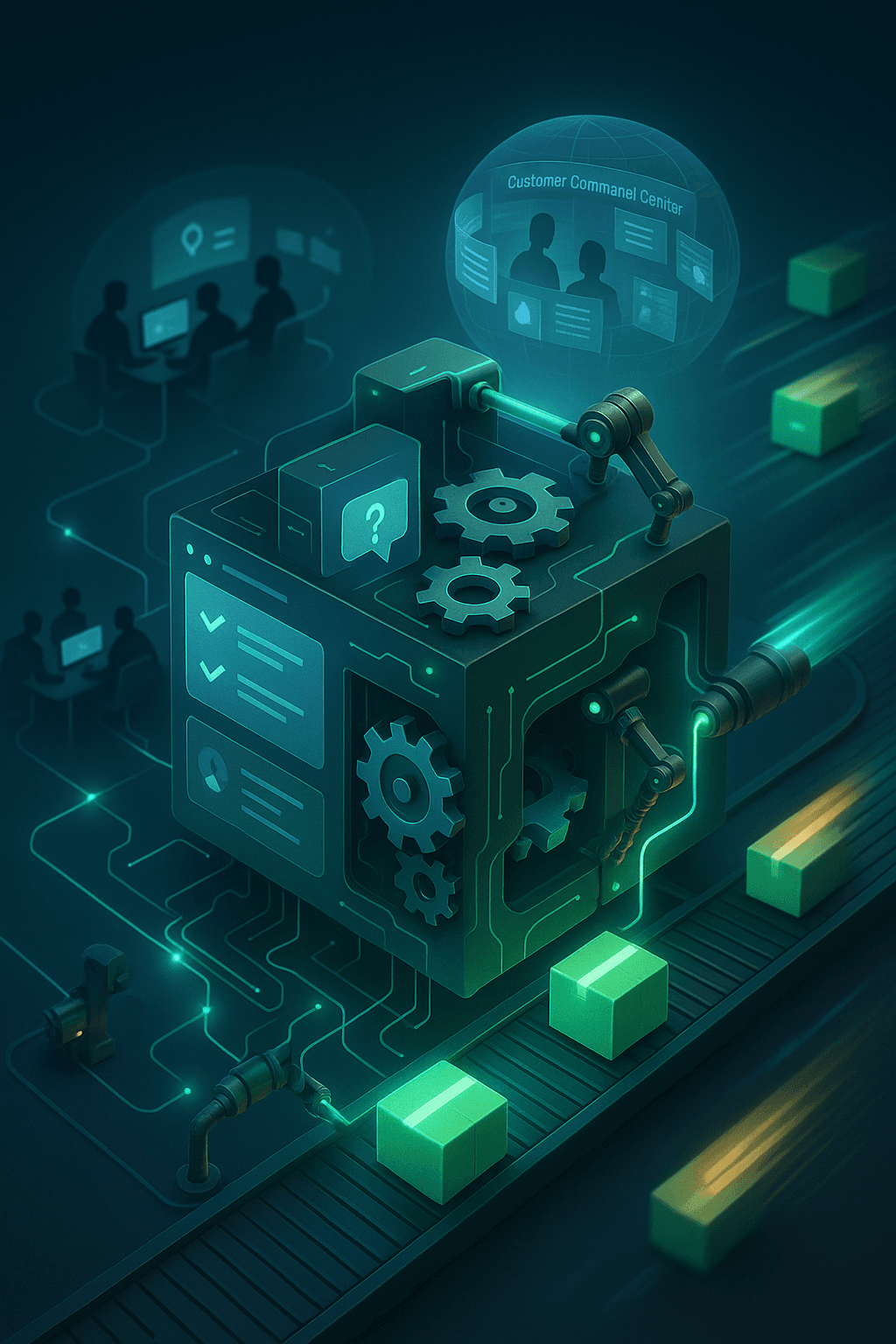
HID moved away from a one-size-fits-all support model toward regional, specialized teams (PACS) able to act fast and accurately. Layer on a Customer Command Centre (24/7 visibility), RPA to route requests, and AI tools that inject orders directly into operational systems. The result: less waiting, less ping-pong, and a customer experience you can sell.
Concretely, for an SME operating in critical sectors (access, security, logistics, financial services), this model can:
- Cut time-to-resolution — reducing penalties, escalations, and silent churn.
- Improve retention — conservative estimates show a +10–15% lift when the mechanics are applied correctly.
- Support premium pricing — support becomes operational insurance, not just a hotline number.
- Streamline RMA — HID shortened replacement lead times by 40% and reworked the flow (immediate replacement before return). That’s massive when your clients’ operations are at stake.
The real lesson: differentiation doesn’t come from a trendy chatbot; it comes from organization + automation + visibility engineered for execution.
The Caveats
There’s a practical downside:
- Hidden costs: HID grew the team by 25%, operates in 9 languages, and invested in tooling. For an SME, regionalizing can create overhead if you don’t have volume by zone.
- Operational complexity: stacking RPA, AI, and command centres without clear governance creates blind spots (quality, ownership, escalation).
- Vendor lock-in: highly custom or proprietary AI/RPA components can create dependency — on cost, on roadmaps, and on reversibility.
Put plainly: copying the façade without designing the mechanics (processes, KPIs, ownership) buys you complexity, not performance.
Compliance Considerations
Data is central: RPA/AI components that process orders typically handle order numbers, customer identifiers, histories, and contractual details. Key checkpoints:
- GDPR / nLPD: map which data flows through RPA/AI, define retention periods, and document legal bases.
- Hosting & transfers: HID didn’t specify hosting. If a cloud component moves data outside the EU/Switzerland, you need audits, a DPA, and contractual clauses — ideally an EU/CH hosting option where appropriate.
- AI Act: if AI drives client-facing decisions (e.g., auto-approving RMAs), you enter stricter governance requirements. Address these before production, not after an incident.
Conclusion & Cohesium Support
The HID case proves a simple point: customer support can be a product. A product that reduces churn, stabilizes your customers' operations, and lets you charge more — provided you structure the organization and automate intelligently without creating lock-in.
Rather than patching things together, Cohesium AI can help:
- Audit and redesign your request-routing (RPA-style) using tools like n8n or Make: triage by region, language, product, priority and SLA, with automated escalation paths.
- Optional: perform an AI audit (governance & compliance) if you automate decisions (RMA, validations, exceptions), with recommendations for guardrails and reversibility.
If you want to turn support into a profit-driving product, let’s discuss a tailored integration or a strategic audit to map ROI, risks, and governance. Contact us